Private Jiu-Jitsu Lessons
in Los Angeles
One-on-one instruction across the West Side, East Side, and Valley. With a 4th-degree Roger Gracie black belt.
You've been meaning to start.
You've watched the UFC with friends. You've heard someone you respect talk about how jiu-jitsu changed their life. A podcast. A colleague who came back from injury a different person.
You've been circling this for a while.
You want something physical. Not a gym. Not spin classes. Something that builds a real skill. Something that makes you feel capable — and, honestly, a little bit dangerous without being stupid about it.
But you haven't started.
Maybe it's procrastination. Maybe it's not knowing what to expect. Or maybe it's something more specific: the image of yourself in a group class, completely lost, in front of strangers. Getting in everyone's way. Confirming a fear you haven't said out loud — that you're past it. That you can't do this.
That feeling is more common than you think.
What actually happens in that group class
Say you go.
You walk into a BJJ gym on a Tuesday night. Twenty people on the mat. A warm-up you've never seen. A technique explained once, too fast, and then you're told to drill it with the guy next to you — who has been training for three years and has no interest in your first-day experience.
You spend an hour copying something you don't understand. No one gives you the big picture. No one explains what anything connects to. No one meets you where you are.
Then there's sparring. Your partner is twenty-five, wants to prove himself, and isn't thinking about your shoulder. You tweak something. A week off the mat. Maybe two.
That's where most people stop.
Not because they decided jiu-jitsu wasn't for them. Because the injury ended the chapter before it began — and the next chapter never starts. Most adult beginners who get hurt in their first few months of group training never go back. The window closes.
Another year passes. The body softens. The “I should do something about this” voice gets louder. Nothing changes.
Why group classes are the wrong starting point
Here is what nobody tells you when you Google “BJJ gym near me.”
Jiu-jitsu is one of the most complex physical disciplines you can learn. Hundreds of positions, submissions, escapes, transitions. The most important thing a beginner needs is not more repetition. It's context. A map. An understanding of what they're actually learning and why.
You cannot get that in a group class of twenty people.
What you can get — when jiu-jitsu is taught correctly — is a martial art that has nothing to do with strength or athleticism. This is the thinking man's martial art. A smaller, technically superior practitioner will beat a larger, stronger one. Every time. That's the foundational principle of the sport. It's why jiu-jitsu works for someone in their late thirties or forties in ways that most physical disciplines simply don't.
Private instruction is not just a faster way to learn. It's the safer starting point. No 25-year-old trying to prove himself across the mat from you. No techniques drilled at your expense. A gradual process built entirely around you.
What training with me looks like
The first session isn't about submissions.
I give you context. The big picture of what jiu-jitsu is, how the skill is built, what matters early and what doesn't. You leave with a clear map for where you're going. The confusion disappears. You can see the path.
You'll also notice something after that first session: it wasn't as hard as you thought. It's more interesting than you expected. You can picture yourself doing this.
That shift — from apprehension to confidence — happens in the first session. Not months from now.
Six months in, something is different off the mat.
You carry yourself differently. On the mat, you've been put in uncomfortable positions. You've learned to stay calm, think clearly, and get out of them. That practice does not stay on the mat. It changes the way you walk into a room. The way you manage pressure. You develop a sense of inner strength, confidence, and security — the kind that comes specifically from knowing you can handle physical confrontation. Not from punching people. From understanding how to control a situation.
Who I am
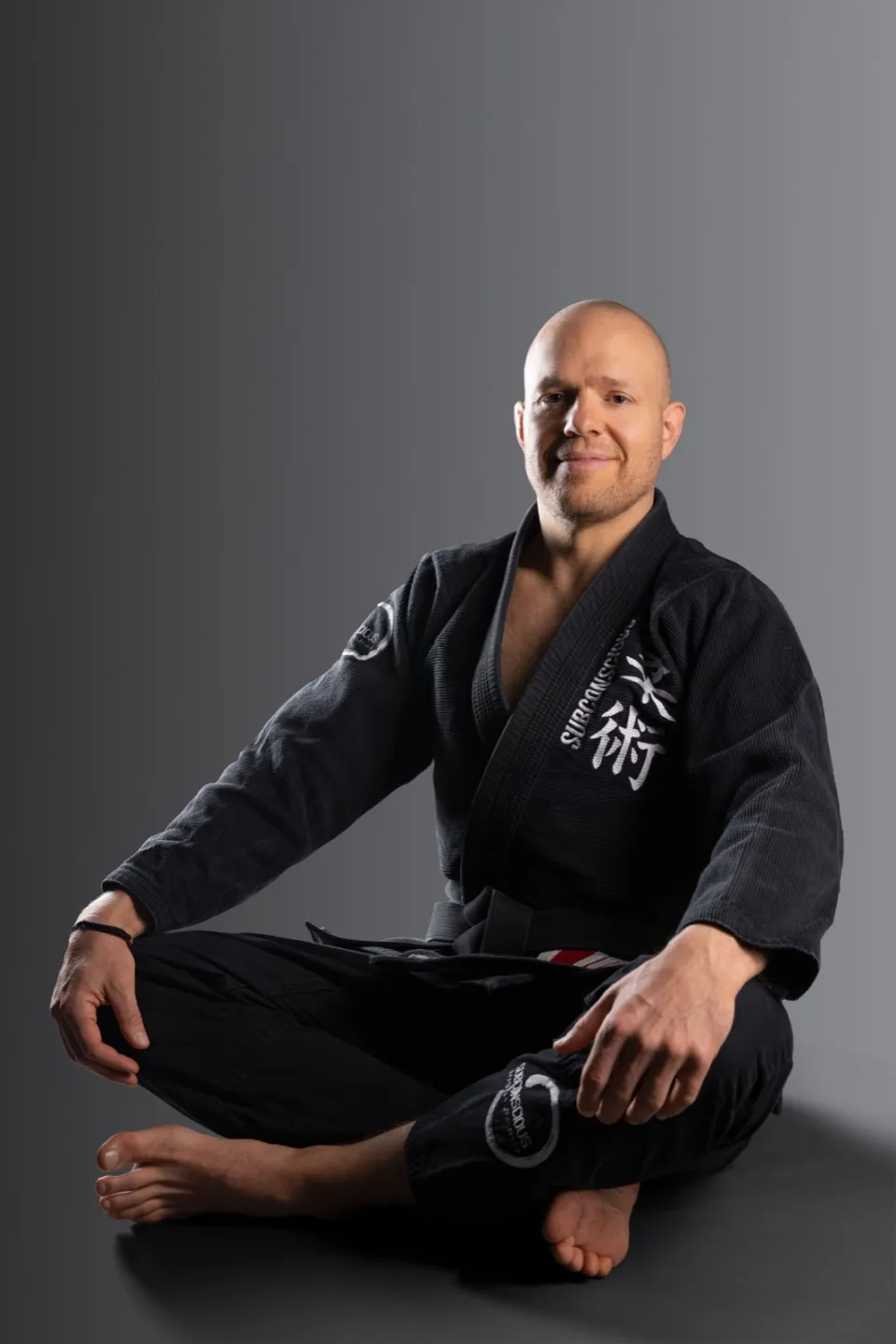
I'm the first black belt from the best jiu-jitsu fighter in history.
Roger Gracie is widely considered the greatest competitive Brazilian jiu-jitsu practitioner of the modern era. Not because of his athleticism — because of his technical precision. He won world titles not by being bigger or stronger, but by being better. I trained under him. He gave me my black belt.
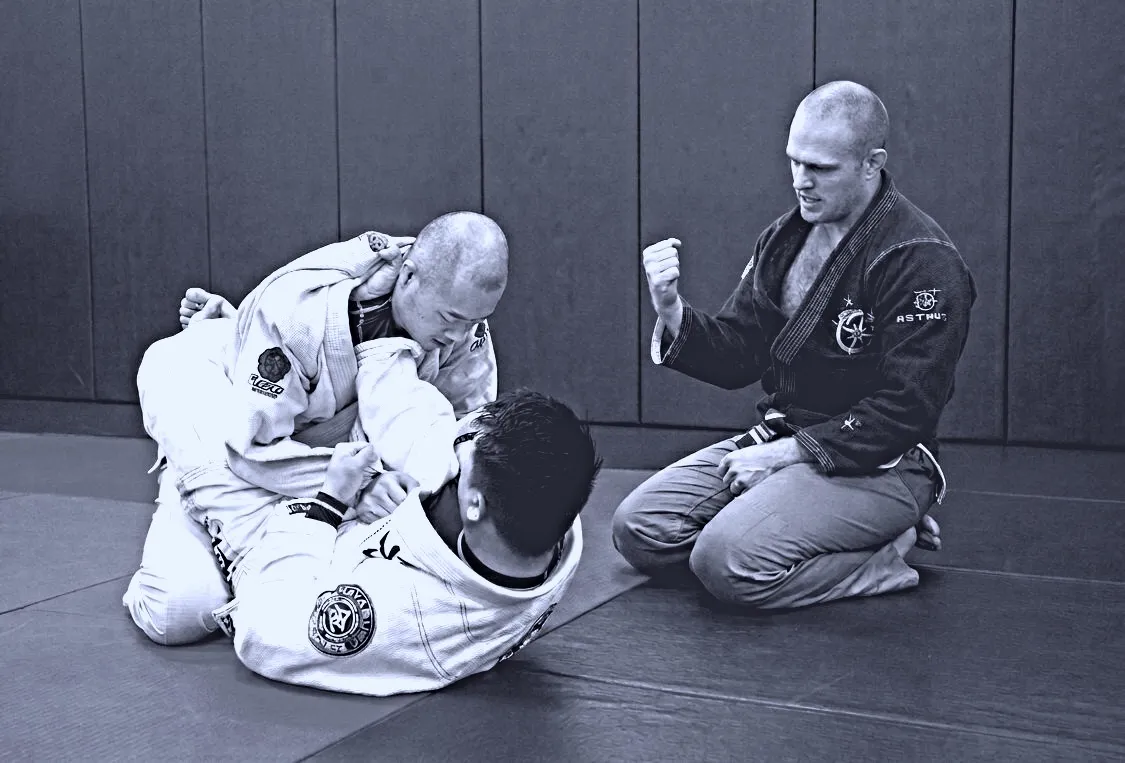
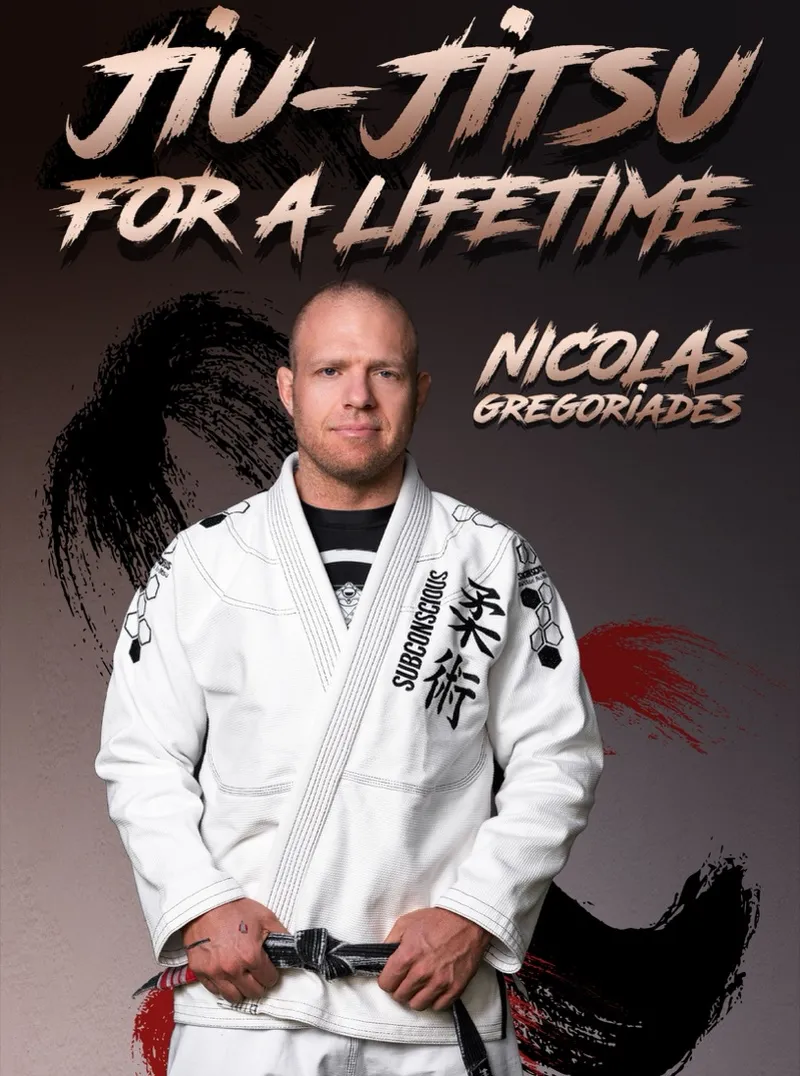
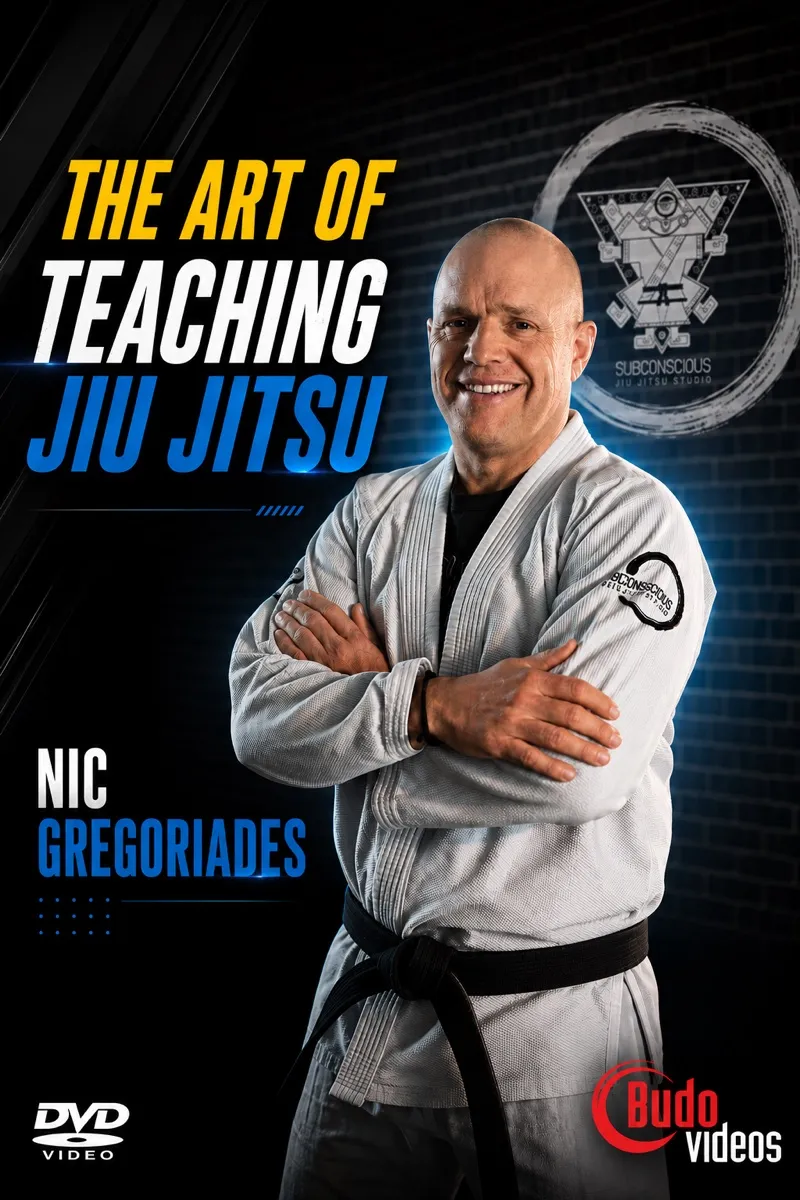
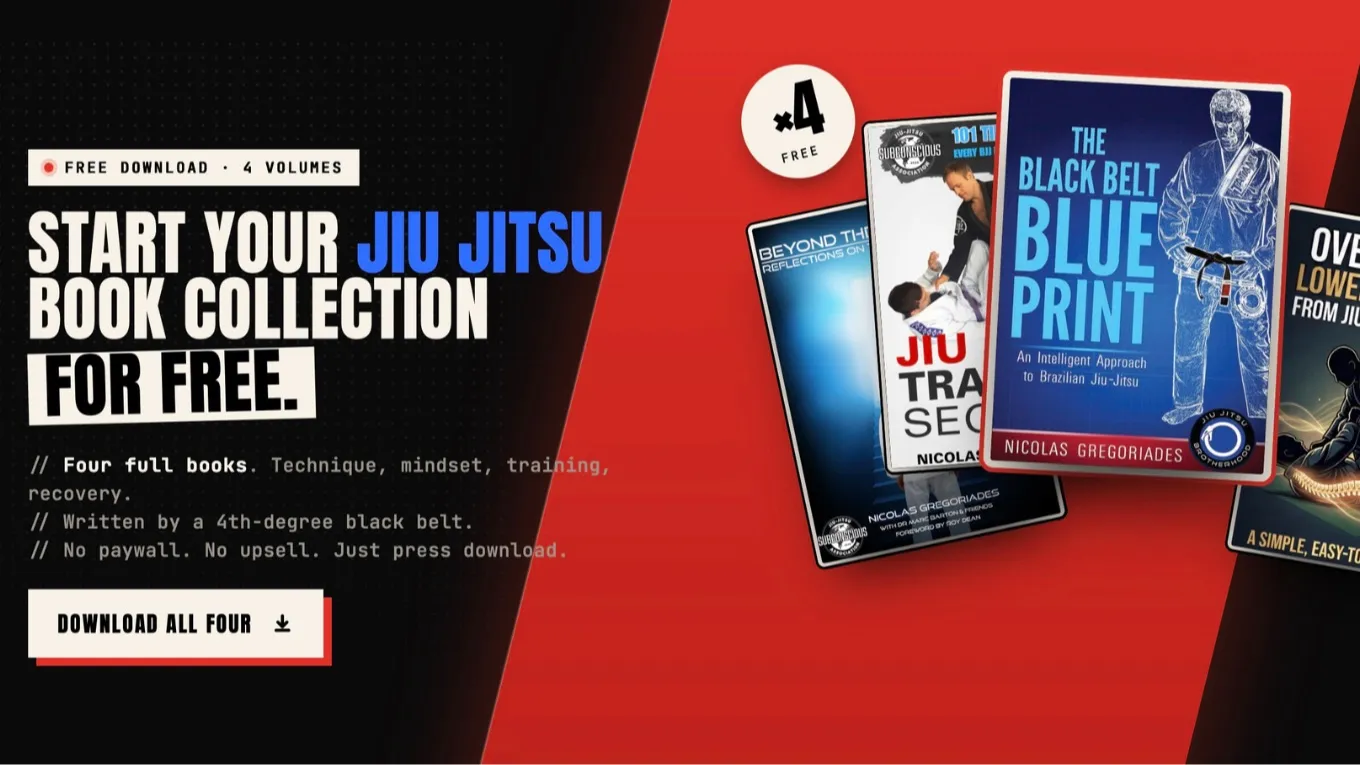
I'm a 4th-degree black belt. 27 years on the mat. Co-founder of The Subconscious Jiu-Jitsu Association and author of The Black Belt Blueprint. I've taught jiu-jitsu in over 20 countries and have helped thousands of people around the world learn the art.
This is my primary work. Not a gym. Not a side job.
“Nic has been teaching me Jiu Jitsu for years, and it's been an amazing experience. He is so patient and knowledgeable and the time I spend with him on the mats flies by. He's made it easy and fun for me to understand this complex art that has changed my life in so many positive ways.”
Things you should know before reaching out
I work with a limited number of private students at a time.
Each student gets real attention, a genuine relationship, and a progression built around them.
I am not the cheapest option in Los Angeles.
I'm significantly more expensive than an average BJJ coach because I'm a significantly more experienced and my instruction is of exceptional quality. If budget is your primary concern, a group class will serve you better. That is an honest statement, not a sales tactic.
I come to you.
Training takes place at partner facilities across three zones: West Side (Santa Monica, Venice, Brentwood, West Hollywood), East Side (Silver Lake, Los Feliz, Echo Park), and the Valley (Studio City, Encino, Sherman Oaks). In Los Angeles, location matters. You pick the zone that works.
Is this the right fit?
This is for you if:
You're a professional, 35–50, in Los Angeles. Jiu-jitsu has been on your radar for a while. You have the income to invest in quality and the sense to know that cheap instruction costs more in the long run. You want a real skill — not a fitness class. You're not trying to prove anything. You want to feel capable.
This is not for you if:
Budget is your first question. Or if you want to walk in and immediately knock people around with brute force. Jiu-jitsu doesn't work that way. Neither do I.
Reach out to discuss fit
Training is one-on-one, in-person, across the West Side, East Side, and Valley. I have limited spots open at any given time. Fill in the form — I'll be in touch.